Author: riverlab

Project manager for stream restoration, and certifying farms for climate adaptation fish friendly farming

CLSI operates the award-winning Fish Friendly Farming (FFF) Certification Program in 15 California counties. Over 200,000 acres are enrolled in the program. The FFF program is a robust certification program that assesses the natural resources of individual farm parcels and includes slopes, soils and creeks and inventories management practices such as soil and water conservation, chemical use, water sources and other practices. We complete maps and a detailed farm plan which specifies Best Management Practices (BMPs) to improve water quality, reduce chemical use, conserve water, revegetate and restore habitats and other actions. In Napa over 90% of the vineyards are FFF certified. CLSI certifies over 15 crops including fruit and nut orchards, field crops, vineyards, cannabis and ranch land.

CLSI also operates the Climate Adaptation Certification, the first agricultural certification program. This program models greenhouse gas emissions and carbon sequestration for all activities on a farm – cover crops, tillage, nitrogen use, burning, diesel equipment use and other actions as well as carbon sequestered in soils, hedgerow and native habitat plantings and existing open space and habitats on the property. Two future scenarios with changed practices are also modeled.

CLSI carries out its programs and projects by establishing collaborative relationships with landowners/managers and agricultural organizations. CLSI also completes scientific studies and monitoring in cooperation with agencies, environmental groups, landowners and other scientists. The organization’s offices are located in Napa, California.

We are seeking a Project Manager to carry out a range of activities including implementation of the FFF program for both irrigated lands and rangeland, implementation of the Climate Adaptation Certification program, technical assistance with state soil health programs and the implementation of erosion control and stream restoration projects. The Project Manager will be an integral part of a small and collaborative staff who works together closely. Salaries are based on experience and education and are competitive for the SF Bay Area. Dental and medical benefits, and a retirement program are included. CLSI is an equal opportunity employer. Submit resume to [email protected] by October 8, 2021.
Eco-Engineer/Eco-Hydrologist – cbec eco engineering

cbec eco engineering is seeking to hire a skilled Eco-Engineer/Eco-Hydrologist I to assist the company in providing technical services to clients. Individuals’ professional experience should include 2+ years technical experience in water resources with a B.S. degree or candidates should have an M.S. or Ph.D. in civil engineering, environmental engineering, water resources, hydrology, or fluvial geomorphology. Responsibilities will include performing technical studies in the fields of hydrology, hydraulics, geomorphology, water quality and restoration design. Tasks will involve developing and applying numerical models, collecting field data, contributing to environmental rehabilitation project design, producing technical reports and figures and potentially managing small projects. Experience developing and applying hydrologic and hydraulic numerical models and competence in coding and GIS are desired. This position offers a great opportunity to work with a passionate and technically proficient team developing scientifically rigorous assessments and restoration designs in a diverse range of California stream, river, wetland and estuary environments.

THE SOCIAL LIFE OF SEDIMENT

Rivers carry not only water, but also sediment. Yet sediment has been largely neglected in many studies of river history, and in current management plans. Profs Giacomo Parrinello and Matt Kondolf review how sediment has been treated (or ignored) by scholars in this introduction to a special issue in the journal Water History.

KLAMATH DAM REMOVAL MOVING FORWARD: CBS NEWS

Riverlab is supporting the ongoing effort to remove four hydroelectric dams on the Klamath River, building on research conducted by Mark Tompkins and Matt Kondolf over a decade ago. An agreement among Tribes, NGOs, local stakeholders, the states of California and Oregon, and importantly, the owner of the dams, has paved the way for removing the dams starting in 2023, as reflected in this recent CBS News report. It will be the largest dam removal in the country and promises to benefit salmon runs in the river, which have been reduced by impacts of the dams and land use in the basin.

Student Presentations and Publications – 16th Annual River Restoration Symposium

A Social Analysis of the San Marcos River
Lilly Byrd

Carbon sequestration potential on a reconnected floodplain: insights from the Cosumnes River, California
Britne Clifton

Fire and Water: Establishing a Geomorphic Baseline for a Perennial Stream in the Walbridge Fire Footprint
Morgan Cooney, Adrienne Dodd, and Molly Oshun

A Restoration on Yongding River, Beijing
Yifan Feng

Salinas River: Historical context, maintenance, and biodiversity
MaFe Gonzalez

The impact of water level fluctuation on vegetation: An assessment of Zhenjiang Section of Yangtze River
Trista Hu

Riparian vegetated buffer in Chinese urban wetlands: a case study of Xixi wetland, Hangzhou
Karen Jin and Jingyi Chen

Restoring San Leandro/Lisjan Creek: Re-establishing Sacred Relationships as Pathways toward Decolonization
Janet Le

The Urban Gauntlet for Steelhead Trout: A Reconnaissance Study of Habitat in Upper Bollinger and Little Pine Creeks, Contra Costa County
Ali Parmer, Derek Morimoto, and Rebecca Kaliff

Understanding the water, understanding the canyon: establishing a baseline study of the Redwood Canyon reach of Cerrito Creek in Blake Garden
Camille Thoma and Dulce Rivas

The Social Evaluation of the Interval River of Shanghai Houtan Wetland Park
Peixuan Wu, Yuetian Wang, and Zhehang Li

NEW INSIGHTS INTO THE TONLE SAP, CAMBODIA

Tonle Sap Lake is unique in its ecological and cultural importance. In the rainy season, water flows upstream from the Mekong River to swell the lake to 4 times its dry-season extent, creating extensive shallow water habitat for fish. When the lake drains back to the Mekong through the Tonle Sap River, it creates one of the greatest fishing grounds of the world, providing protein to millions of people. Research by former Riverlab/Fulbright visiting scholar Chantha Oeurng and his student Ty Sok demonstrates evolving flow and sediment relations between the lake and the Mekong River. The just-published paper,  Assessment of Suspended Sediment Load Variability in the Tonle Sap and Lower Mekong Rivers, Cambodia, is available for free download until late May from Catena here.

RIVERLAB TEAM WINS ASPEN INSTITUTE ITALIA AWARD FOR MEKONG RESEARCH

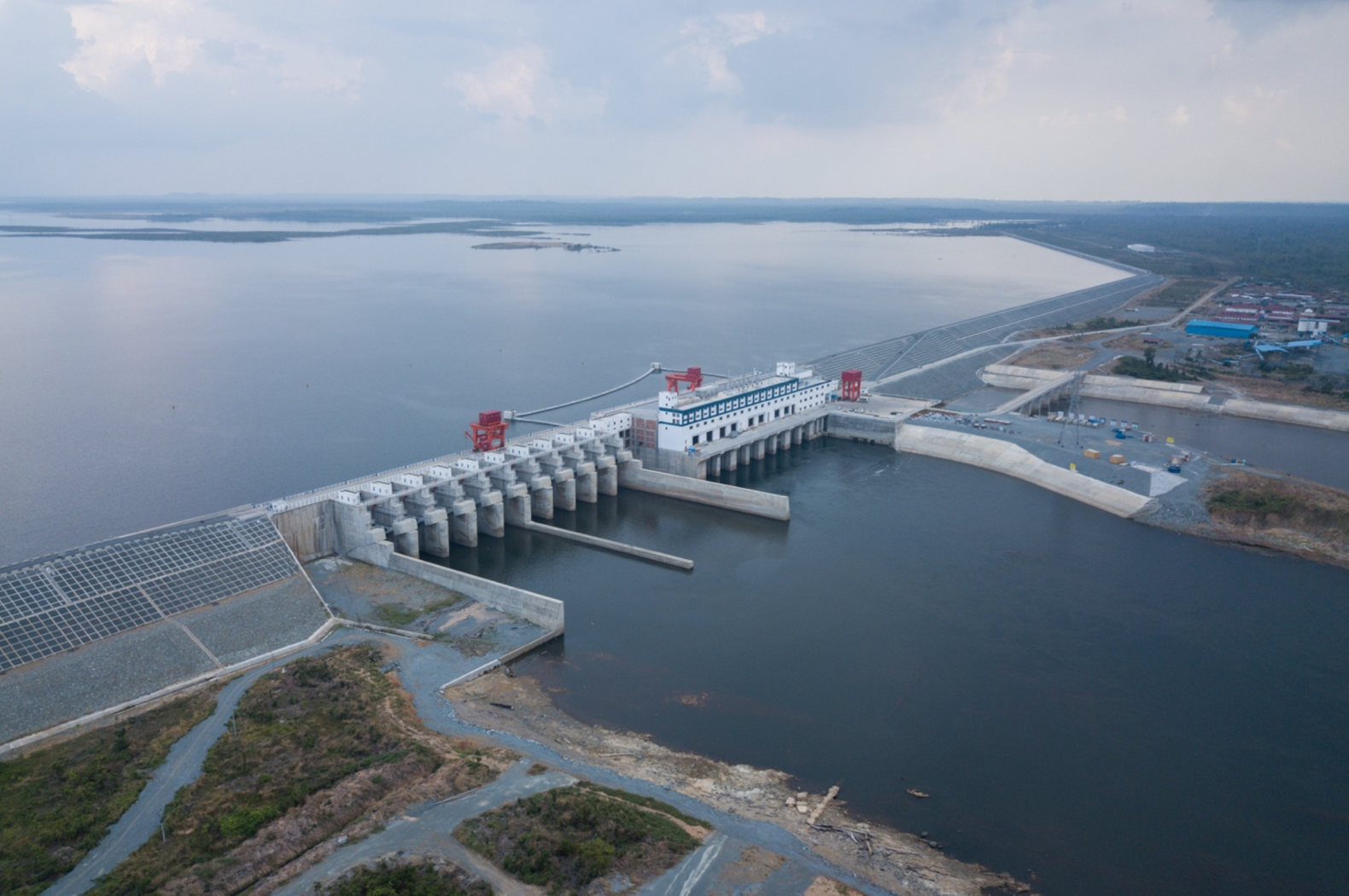
Two Riverlab researchers (Rafael Schmitt and Matt Kondolf) and two Italian colleagues (Simone Bizzi and Andrea Castelletti) have been awarded the 2021 Aspen Institute Italia Award for their joint research on “Improved trade-offs of hydropower and sand connectivity by strategic dam planning in the Mekong” [1].  The scientists are working on this ongoing effort to reduce impacts of the global clean energy transition on rivers and livelihoods.

Building future green economy poses great economic and technical challenge for societies, in part because of the often-overlooked externalities of technology and infrastructure on people and the environment. In their research, the scientists used the example of hydropower development to demonstrate need and opportunity to resolve such conflicts through strategic spatial planning. Hydropower is a well-proven and cost-effective way to generate renewable energy. At the same time, dams can have catastrophic impacts on people’s livelihoods and the fundamental processes that underpin healthy rivers. Thus, there is great concern about the environmental impacts of future dams, mostly planned to energize socio-economic development in the global south.

Photo credit: Thomas Cristofoletti / Ruom

The winning research demonstrated that strategic placement of dams, considering for the spatial heterogeneity of natural processes in rivers and the cumulative impacts of multiple dams, can greatly reduce dam impacts without compromising on energy generation and energy costs. That finding was derived by combining a novel computer model for evaluating large scale impacts of dams on rivers with state-of-the art tools for decision analysis. The study was based on the example of the Mekong River in South East Asia, where a massive hydropower development occurred in the recent past, and more development is foreseen in the near future. Results show that existing dams, exploiting around 50 % of the basin’s hydropower potential, have major impacts on the biophysical functioning of the studied rivers. The key finding of the study is that the same amount of hydropower could have been generated with much smaller impacts if dam sites would have been selected strategically such as to reduce their cumulative impacts.

While the results were derived for the Mekong River, the findings have broad implications for renewable water and energy systems world-wide. Globally, increasing conflicts between infrastructure and natural systems are inevitable: Other forms of renewable energy create environmental impacts, more water infrastructure will be required to meet domestic and agricultural water demands, and industrialized countries must soon review their aging infrastructure portfolios. In this context, strategic decision making, which balances economic and ecosystem needs is crucial for an ecologic transition to water and energy systems with minimal impacts on nature and maximal benefits for society.  


[1]  The reasearch has been published by Nature Sustainability | VOL 1 | FEBRUARY 2018 | 96–104 |

Postdoc position: Assessing ecosystem benefits for hydropower under land use and climate change

The successful candidate will explore impacts of climate and landuse change on a hydropower dam in Peru (recently acquired by a major a Chinese State-owned Enterprise), and evaluate opportunities for catchment management to reduce those impacts. The project is with the Chinese Academy of Sciences, and the position will be shared between Stanford and Beijing. The candidate should be fluent in Chinese and have a background in hydrology or landuse planning. The announcement is here.

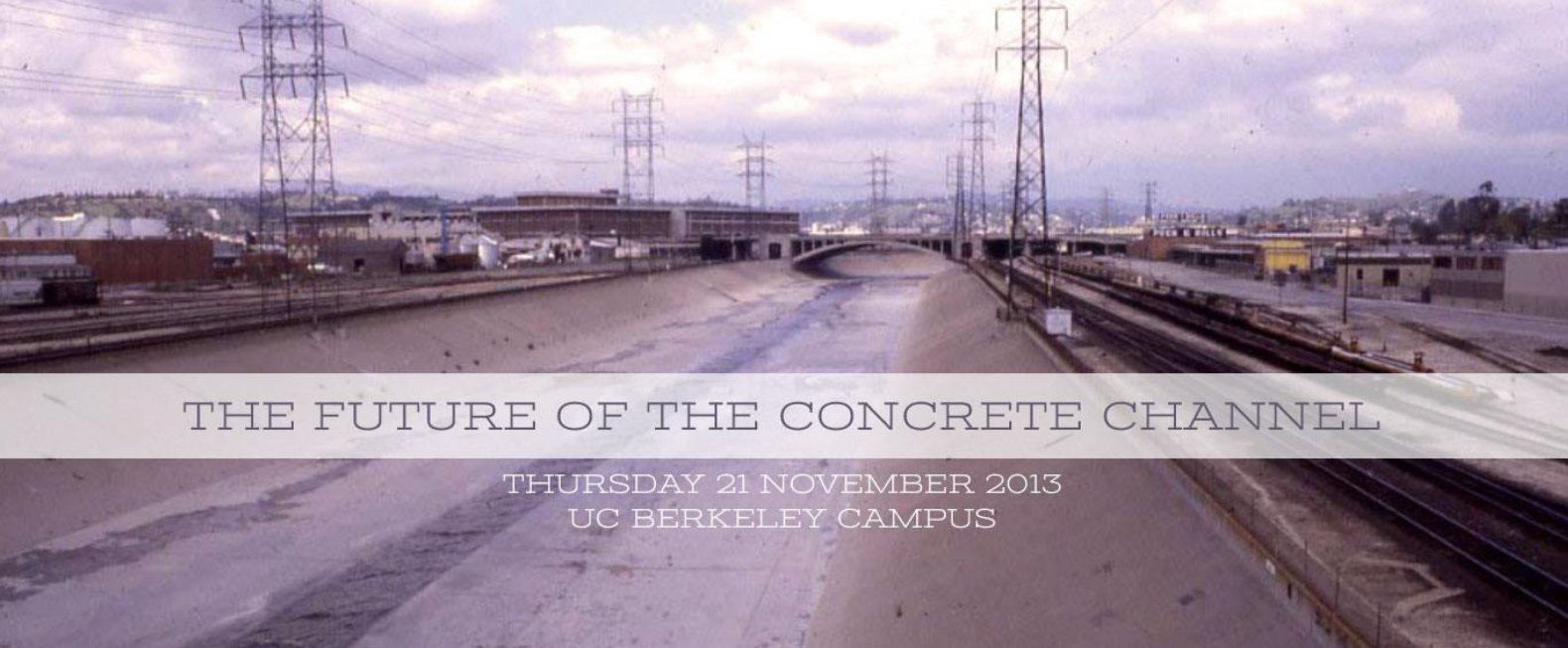
REMEMBERING LEWIS MACADAMS AND THE FUTURE OF THE CONCRETE CHANNEL

Poet Lewis Macadams is well-known to river afficionados thanks to his visionary work to respect and restore the Los Angeles River. Founder of the NGO Friends of the Los Angeles River, MacAdams was instrumental in putting the river ‘on the map’ for the public, and ‘on the radar’ of the political life of Los Angeles, leading to the City’s River Master Plan in 1991 and the River Revitalization Master Plan in 2007. MacAdams passed away last April at 75, but the news of his loss was largely eclipsed at the time by the chaos created by the COVID pandemic and economic dislocation. An essay Shall We Gather at the River? published by the Poetry Foundation provides a fascinating biography of MacAdams, tracing his earlier years in New York, Buffalo, and Bolinas, before moving to Los Angeles four decades ago and adopting the river. MacAdams’ book-length poem, The River, is out of print but is worth seeking out from the library until it is reissued.

MacAdams was a featured speaker at (and a key inspiration for) the conference The Future of the Concrete Channel convened by the Department of Landscape Architecture and Environmental Planning in November 2013, organized by Matt Kondolf and Raymond Wong. The conference program featured these topics and speakers:

Policy background Scott Nicholson USACE HQ, Rethinking flood control 23 years later Phil Williams PWA-ESA, Overview of concrete channels around the SF Bay Raymond Wong, UCB, A historical perspective Bill Kier, Kier Associates, Contra Costa County Mike Carlson CCCFC, Santa Clara County Jim Fiedler, SCVWD, Menomonee River David Fowler, Milwaukee MSD, Resonance in contemporary culture Chip Sullivan, UCB, David Fletcher, California College of the Arts, A 50-year plan for Contra Costa Streams Mitch Avalon, CCCFC, The Ala Wai Canal project feasibility study Scott Nicholson, Replacing aging concrete channels David Fowler, MMSD, Los Angeles River Ecosystem Restoration Project Carol Armstrong, City of Los Angeles, Evolving concepts of restoration Lewis MacAdams, FOLAR, Overcoming barriers to reinventing concrete channels Jeff Haltiner, UCB & ESA-PWA, Kathy Schaefer, FEMA, Louise Mozingo, UC Berkeley, Mitch Avalon, CCCFC; Ralph Johnson, Alameda County.

HIGH-FLOW RELEASES FROM DAMS TO RESTORE GEOMORPHIC PROCESSES, AQUATIC HABITATS: NEW PUBLICATION AVAILABLE

Deliberate high-flow releases are increasingly made from dams to mimic effects of floods and interact with the channel to produce biophysical changes in channel characteristics, such as removing fine sediment from downstream aquatic habitats. These are a special case of environmental flows intended to mitigate geomorphic/ecological effects of dams, commonly termed flushing flows. In a new publication, Remi Loire and colleagues propose new terms for these high flow releases: morphogenic releases, or ecomorphogenic releases for flows intended specifically to improve aquatic and riparian habitats. The paper, published in Earth Science Reviews, reviews objectives of these flows, experiences gained from their implementation, and potential conflicts with environmental, socio-economic, and dam-operational issues. The paper is available until 21 February 2021 for free download here.

Loire, R, H Piégay, J-R Malavoi, GM Kondolf, and LA Bêche. From flushing flows to eco-geomorphic flow releases: evolving terminology, practice, and integration into regulated river management. Earth Science Reviews 213: 103475