Category: Uncategorized

Documentary Film Night, Blue Heart

DOCUMENTARY FILM NIGHT | BLUE HEART

29 November 2018, 630p-800p

World Affairs Auditorium 312 Sutter Street, Suite 200 San Francisco, CA

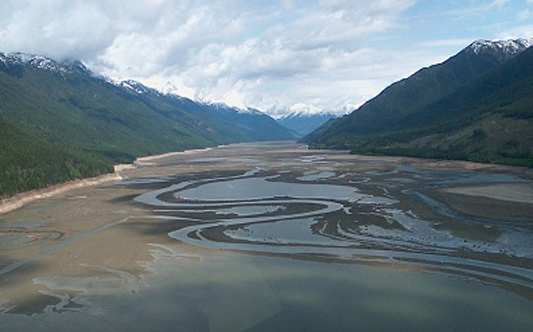
In the Balkans, 91% of the more than 3000 proposed dam projects involve small hydropower diversion dams. These dams reroute water, letting rivers run dry and causing irreversible damage to the watershed, wildlife and local communities. What’s more, nearly $870 million has been poured into dam construction in the Balkan region, with local governments garnering cash from these mammoth building projects, without actually delivering clean energy. The film “Blue Heart” documents these impacts and highlights efforts to stop dam construction.

Focusing on the largest undammed river in Europe—Albania’s Vjosa— “Blue Heart” tells the story of the battle to save the endangered Balkan lynx in Macedonia, and the women of Kruščica, a village in Bosnia and Herzegovina, where a lengthy protest to save the community’s only source of fresh water has been underway. The film follows some of the amazing activists fighting displacement by proposed hydropower projects, and explores what can be done to preserve the environment.

Following the screening, Britton Caillouette, filmmaker of “Blue Heart, and Matt Kondolf, Director of UC Berkeley’s River Lab, will talk about the ways that hydro dams affect the rivers, the environment, and the people who live nearby.

To sign the Blue Heart petition, visit https://blueheart.patagonia.com/take-action. To learn more about grassroots organizations and activists working to protect waterways and the environment in the Bay Area, visit Patagonia Action Works. The film is presented in partnership with  Patagonia.
 

The 14th Annual Berkeley River Restoration Symposium

Saturday 8 December 2018, 9a-330p, Rm 112 Wurster Hall, UC Berkeley

This year’s Berkeley River Restoration Symposium features a keynote talk Managing river sediment in extreme conditions: lessons for California by Professor Hsiao-Wen Wang (National Cheng Kung University, Taiwan) followed by student research talks covering a wide range of restoration-related topics.  The morning will feature research projects on rural stream systems, including post-project appraisal of a Sierra Nevada meadow restoration, analysis of alternatives for floodplain restoration at the confluence of Redwood and Prairie Creeks, the use of live wood in river restoration, hydro-geomorphic drivers of coho salmon outmigration in Russian River tributaries, and an initial assessment of Curry Creek, Mount Diablo. The afternoon talks focus on smaller urban streams, including post-project appraisals of Arroyo Viejo, Santa Rosa, and Codornices Creeks, planning for San Anselmo Creek in Creek Park and Cerrito Creek in Blake Garden.  Panelists (including Lisa Hunt, Hsiao-Wen Wang, Rod Wittler, Tami Church, and Tim Pine) will comment on themes raised in the student research.

For further information, please see the symposium website. The symposium is free and open to the public.

Registration | Please register by Friday 12/07 so we can supply sufficient programs and coffee! 

River and reservoir sustainability in a monsoon climate: experience from Taiwan

02 November 1030a-1p, Rm 223 Moses Hall

Presented by Professor Hsiao-Wen Wang (National Cheng Kung University Taiwan), currently a Fulbright scholar at Berkeley working on conflicts between renewable energy and ecological values.  Like California, Taiwan has highly seasonal precipitation with high interannual variability, so reservoir storage is essential to provide water in dry months and dry years.  But the sediment yields in Taiwan are among the highest in the world, resulting in rapid filling of reservoirs, motivating Taiwan to implement sediment management measures sooner than elsewhere (Wang et al. 2018).  What can we learn from Taiwan’s experience?

This seminar is part of the interdisciplinary faculty seminar series, Water Management: Past and Future Adaptation, presented under the auspices of the UC Berkeley Institute of International Studies.  As both the developed and developing world confront intensifying demands on rivers and other water resources, impacts are evident from extractions of water for human uses, proliferation of dams, mining sediments from river beds, and intensified land-use impacts, all exacerbated by climate change.  Accelerated erosion of coasts and deltas (e.g., from sediment starvation, groundwater pumping, accelerated sea-level rise) are among the manifestations of these impacts.  Our seminar takes an interdisciplinary approach these challenges by examining how societies have adapted to variability in the past (uncertainty in water supply, flood risk, etc) and considers the tools we have to manage future variability in river flows and sediment loads, including variability in water supplies, increased flood risk, and the existential threat to many coastal areas.


References Cited

Wang, H-W, GM Kondolf, D Tullos, and W-C Kuo.  Sediment management in Taiwan’s reservoirs and barriers to implementation.  Water 10(8), 1034; doi:10.3390/w10081034


Managing sediment at the river basin scale: sediment-starved rivers and sand rights for the coast

Friday 26 October 1030-1p, Rm 223 Moses Hall.

The seminar will feature contributions from Carrie Monohan (Sierra Fund), Katherine Stone (MWGJF, retired), Mark Capelli (NOAA), and discussant Holly Doremus (Boalt).  Dams and instream aggregate mining interrupt the continuity of sediment in river systems, with consequences including coastal sediment starvation and consequent accelerated erosion and delta subsidence.  The concept of ‘sand rights’ has been proposed as a legal doctrine to protect downstream and coastal interests from interruption of their natural sand supply (Stone 2000).  In northern California, the legacy of sediment accumulation from 19th and early 20th century gold mining continues to present challenges, including problems created by the ‘debris dams’ (such as Englebright Reservoir on the Yuba) constructed to prevent sediment generated by hydraulic mining from moving downstream.

This seminar is part of the interdisciplinary faculty seminar series, Water Management: Past and Future Adaptation, presented under the auspices of the UC Berkeley Institute of International Studies.  As both the developed and developing world confront intensifying demands on rivers and other water resources, impacts are evident from extractions of water for human uses, proliferation of dams, mining sediments from river beds, and intensified land-use impacts, all exacerbated by climate change.  Accelerated erosion of coasts and deltas (e.g., from sediment starvation, groundwater pumping, accelerated sea-level rise) are among the manifestations of these impacts.  Our seminar takes an interdisciplinary approach these challenges by examining how societies have adapted to variability in the past (uncertainty in water supply, flood risk, etc) and considers the tools we have to manage future variability in river flows and sediment loads, including variability in water supplies, increased flood risk, and the existential threat to many coastal areas.


References Cited

Stone, K. 2000. Sand rights: a legal system to protect the shores of the sea. 29 Stetson Law Review 709, 732 (2000). 


Parallel trends in river evolution across continents in the Anthropocene: implications for sustainable water and environment

Tuesday 11 September 2018, 3:30-5pm, Rm 223 Moses Hall, UC Berkeley

The term ‘Anthropocene’ is proposed for our current epoch, in which the role of human activity is beginning to exceed that of natural forces in shaping the earth’s surface.  Rivers are now adjusting their morphology from the cumulative impact of many drivers for change operating at multiple spatial and temporal scales: changing land uses, instream aggregate mining, channelization, bank protection and dam construction, alongside changing flood and flow regimes.  In response, river channels have narrowed, incised into their beds, reduced their lateral activity, and frequently changed from multi-thread to single-thread channel patterns.   Integrative analyses of these multiple causes and effects were impractical until recent improvements in digital technologies and data availability.  Synthesis of prior cumulative impact studies and a GIS-based analysis of newly available digital data demonstrate that river systems (in both the Old World and New) became significantly simplified, more static, and more homogenous over the 20th century, with important implications for river ecosystems and the benefits provided to human populations.


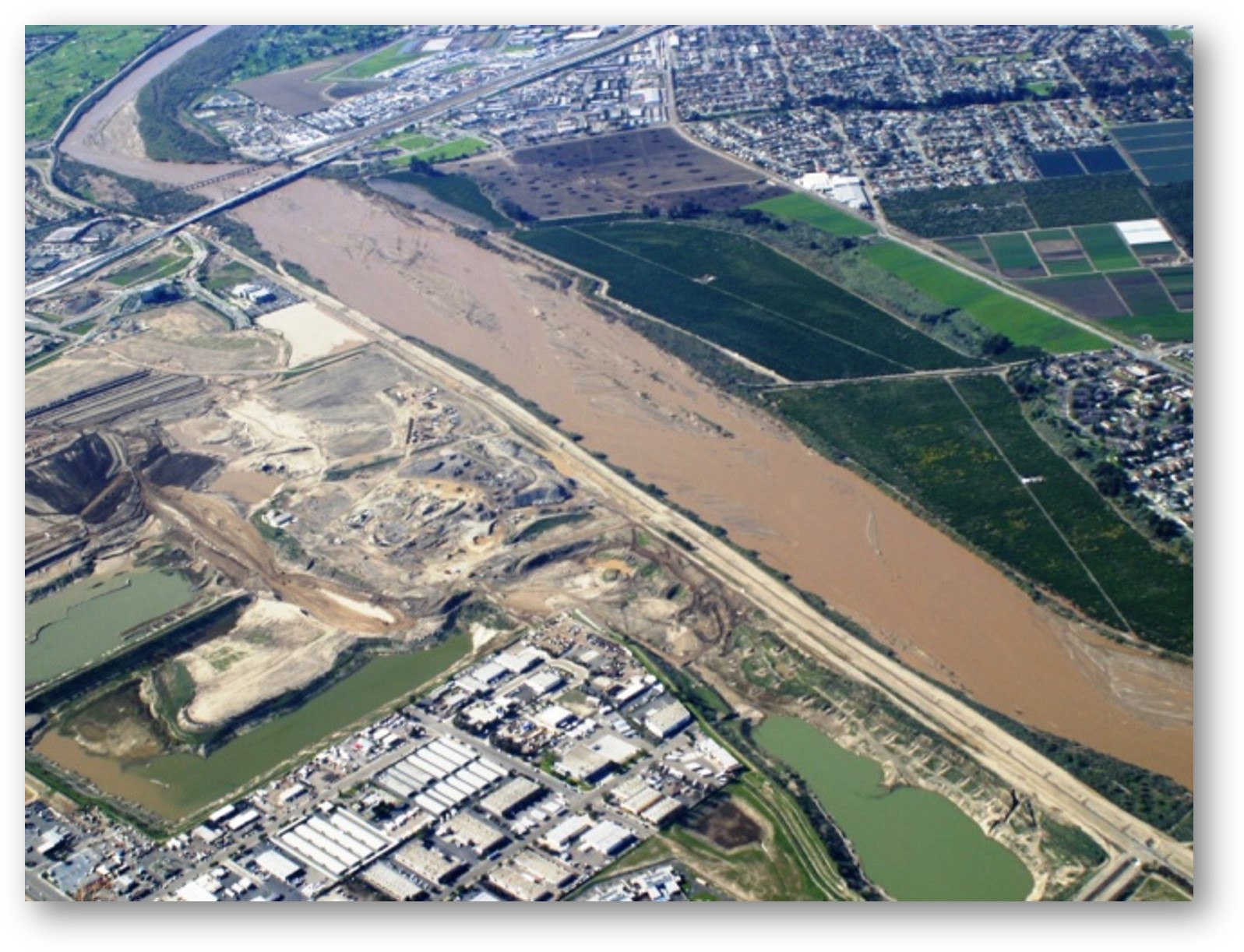
The Santa Clara River flows through a complex floodplain landscape in Southern California.


Peter Downs is an Associate Professor of Physical Geography at the University of Plymouth, UK.  Previously at the University of Nottingham, Peter also spent ten years in interdisciplinary professional practice in the Bay Area which continues to guide his research interests in fluvial geomorphology, river restoration, and science and policy in river basin management.  Recent projects have involved the development of a process-based sediment budget, investigating the coarse sediment dynamics in upland channels, and passive monitoring of coarse sediment fluxes using seismic impact plates.  In each case, research is stimulated by a distinct practical challenge.  The topic of this seminar stems from a EURIAS Senior Fellowship (2016-17), spent at the Collegium de Lyon Institute for Advanced Studies, initiating research into the cumulative impact of human activities and natural factors in determining the evolution of river channels during the late Anthropocene.


This seminar is presented as part of the interdisciplinary faculty seminar series Water Management: Past and Future Adaptation of the UC Berkeley Institute of International Studies.

Colloquium Lecture: Social Connectivity of Urban Rivers

Wednesday, September 5, 2018, 315A Wurster Hall, UC Berkeley, 1:10PM – 2:00PM

Professor G. Mathias Kondolf
University of California, Berkeley Landscape Arch. & Environmental Planning, Co-Director Global Metropolitan Studies


Social connectivity of urban rivers is the communication and movement of people, goods, ideas, and culture along and across rivers, recognizing longitudinal, lateral, and vertical connectivity, social interactions that are especially intense and pervasive in urban reaches of rivers. Urban riverfront projects have become ubiquitous in the developed, and increasingly in the developing worlds, but these projects raise questions about what constitutes ‘restoration’ in the urban context, and to what degree natural processes and ecological values can be restored in an urban context.


Mathias Kondolf is a fluvial geomorphologist, Professor of Environmental Planning at the University of California Berkeley, and fellow at the Collegium, Institute for Advanced Studies, University of Lyon, France. He teaches courses in hydrology, river restoration, and environmental science. He researches human-river interactions, including managing flood-prone lands, urban rivers, sediment in rivers and reservoirs, and river restoration and advises governments and non-governmental organizations on sustainable management of rivers.

The Social Life of the Sediment Balance: A social and geomorphic approach to the transformation of river systems and deltas

A new collaborative project will explore the social and natural processes that lead to the modification of sediment balance in rivers. Interdisciplinary scholarship on river systems and society is usually concerned with water flows, but rarely with sediment balance. Sediments, however, are essential components of river systems. Hydroelectric dams, canals, navigation, sand and gravel mining, and other human uses alter sediment fluxes, often with detrimental consequences on the river morphology and ecology as well as on coastal land.

The project will bring together two scholars with different perspectives on this topic: Giacomo Parrinello, Assistant Professor of Environmental History at the Centre for History at Sciences Po (CHSP), brings a social science and history background, while G. Mathias Kondolf, Professor of Environmental Planning and Geography in UC Berkeley’s Department of Landscape Architecture and Environmental Planning, is an expert in the geomorphology of river systems. Parrinello and Kondolf received one of four inaugural grants from the UC Berkeley Social Science Matrix and Sciences Po to develop their project. See Matrix webpage for more details.

Nature Sustainability: Better trade-offs between hydropower production and dam sediment trapping – can this work and how?

2

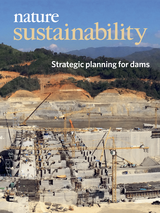
Paradigms like “the right-project in the right place” have been proposed to make hydropower more sustainable by selecting low-impact / high-benefit dam sites. But what is a good strategy for selecting the right projects and places, and can such strategic hydropower planning really contribute to develop more sustainable hydropower? The February issue of Nature Sustainability “Strategic Planning for Dams” features the research of Rafael Schmitt and Matt Kondolf from UC Berkeley, together with Simone Bizzi and Andrea Castelletti from Politecnicno di Milano (“Improved trade-offs of hydropower and sand connectivity by strategic dam planning in the Mekong” DOI: 10.1038/s41893-018-0022-3). In that paper, we demonstrate that strategic selection of dam sites can greatly improve the trade-offs between hydropower production and dam sediment trapping, one of the key environmental impacts of dams.

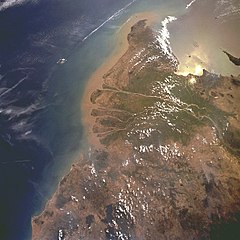
The Se Kong, Se San, and Sre Pok form a major tributary basin of the lower Mekong and are a crucial source of sand for the lower Mekong and the Mekong Delta. This sand is of critical importance to build the floodplains of the lower Mekong and the coastline of the Mekong Delta. This sand supply would have been of even greater importance in the future, given that the Mekong Delta, which supports nearly 20 million people, is under substantial danger from rising sea levels and land subsidence (see, for example Schmitt et al. (2017) Losing ground – scenarios of land loss as consequence of shifting sediment budgets in the Mekong Delta
). However, there is also a great need for energy in the basin’s abuting countries. In the 3S basin, countries raced to develop hydropower dams without considering dam cumulative impacts and benefits, or a strategic analysis of which dam portfolios could achieve a given level of hydropower generation with minimal impact on the basin’s sand budget.

In our research, we found that the currently built dam portfolio will trap 90 % of the basin’s sediment load, while exploiting 50 % of the basin’s generation potential. By analysing nearly 17,000 alternative dam portfolios, we found that it would have been possible to generate the same amount of hydropower while trapping less than 20 % of the basin’s sand load. The current dam portfolio includes major dams on the river that carry most sand load. Our alternative portfolio consists of smaller dams in the upper parts of the basin and in rivers that carry naturally less sand.

We hope that our results will motivate additional efforts for building institutional frameworks to streamline strategic system-scale planning into the ongoing hydropower expansion world-wide and hence to find better trade-offs between energy needs and the delivery of fluvial ecosystem services. .

New Science Requirements in Support of a Modernized Columbia River Treaty

The Columbia River Treaty was an innovative agreement to coordinate management of the Columbia River to maximize benefits and equitably share them between the US and Canada.  It has been recognized as an excellent example of trans-boundary integrated water resources management, the concept that river basins be managed as integrated systems so that the total benefits are greater than would be the case if each country managed purely on its own narrow self interest, and then those benefits can be equitably shared.  When the Treaty was ratified in 1964, it did not adequately account for fisheries, river ecology, and the interests of tribes and first nations.  The impending treaty renewal has been widely seen as providing an opportunity to update the treaty by including consideration of these issues.  There are scientific uncertainties regarding impacts of dams and potential to restore fisheries on the river and its tributaries, the benefits of flood storage in Canadian dams, etc, which merit attention.  And looming over all treaty-related deliberations now is the recent change in US administrations, introducing uncertainty about whether the US will respect the cooperative nature of the last five decades of trans-boundary management of the Columbia River and approach updating of the agreement in a collaborative manner.

A group of scientists supported by representatives of First Nations and Tribes from Canada and the United States held a workshop at the Centre for Canadian Studies and Institute of International Studies at the University of California, Berkeley in April 2017 to develop recommendations for effectively integrating science into the treaty renewal process.

New Publication on Mekong Delta, free access until 15 February

A team of active researchers in the Mekong have published a paper, Changing sediment budget of the Mekong: Cumulative threats and management strategies for a large river basin, available for free downloads until 15 February.

Abstract
Two decades after the construction of the first major dam, the Mekong basin and its six riparian countries have seen rapid economic growth and development of the river system. Hydropower dams, aggregate mines, flood-control dykes, and groundwater-irrigated agriculture have all provided short-term economic benefits throughout the basin. However, it is becoming evident that anthropic changes are significantly affecting the natural functioning of the river and its floodplains. We now ask if these changes are risking major adverse impacts for the 70 million people living in the Mekong Basin. Many livelihoods in the basin depend on ecosystem services that will be strongly impacted by alterations of the sediment transport processes that drive river and delta morpho-dynamics, which underpin a sustainable future for the Mekong basin and Delta.

Drawing upon ongoing and recently published research, we provide an overview of key drivers of change (hydropower development, sand mining, dyking and water infrastructures, climate change, and accelerated subsidence from pumping) for the Mekong’s sediment budget, and their likely individual and cumulative impacts on the river system. Our results quantify the degree to which the Mekong delta, which receives the impacts from the entire connected river basin, is increasingly vulnerable in the face of declining sediment loads, rising seas and subsiding land. Without concerted action, it is likely that nearly half of the Delta’s land surface will be below sea level by 2100, with the remaining areas impacted by salinization and frequent flooding. The threat to the Delta can be understood only in the context of processes in the entire river basin. The Mekong River case can serve to raise awareness of how the connected functions of river systems in general depend on undisturbed sediment transport, thereby informing planning for other large river basins currently embarking on rapid economic development.